Blog
Demand for Beveled Bottles in Japan | Global Market Analysis Report


Demand for Beveled Bottles in Japan 2025 to 2035
The Japan beveled bottles demand is valued at USD 250.7 million in 2025 and is forecasted to reach USD 421.1 million by 2035, with a CAGR of 5.3%. Demand is supported by packaging upgrades in premium beverages, cosmetics, specialty food categories, and high-grade pharmaceuticals. Beveled bottle formats are used where shelf differentiation, tactile appeal, and strong brand presence are critical. Growth is also sustained by product launches in craft beverages and personal-care applications where rigid containers remain preferred for durability and design flexibility. Compliance with Japan’s packaging standards ensures continued use of recyclable glass formats in retail and institutional distribution channels.
Round beveled bottles lead the shape category. Their consistent stacking strength, labelling versatility, and compatibility with automated filling lines encourage adoption among bottlers and brand owners. Enhanced resistance to breakage, coloured-glass barrier protection, and lightweight structural designs influence procurement decisions. Design optimization using high-precision moulding supports ergonomic handling and visual clarity for luxury-grade products.
Quick Stats for Japan Beveled Bottles Demand
- Japan Beveled Bottles Sales Value (2025): USD 250.7 million
- Japan Beveled Bottles Forecast Value (2035): USD 421.1 million
- Japan Beveled Bottles Forecast CAGR (2025 to 2035): 5.3%
- Leading Shape in Japan Beveled Bottles Demand: Round Bottles
- Key Growth Regions in Japan Beveled Bottles Demand: Kyushu & Okinawa, Kanto, Kansai
- Top Players in Japan Beveled Bottles Demand: Nihon Yamamura Glass Co., Ltd., Hankuk Glass Industries Japan, Mitsubishi Glass Co., Ltd., Otsuka Packaging Industries Co., Ltd., Ardagh Group Japan
Kyushu & Okinawa, Kanto, and Kansai record the highest utilization due to concentration of beverage manufacturers, cosmetics processors, and packaging converters. These regions also house major ports and logistics hubs supporting distribution across domestic retail chains. Key suppliers include Nihon Yamamura Glass Co., Ltd., Hankuk Glass Industries Japan, Mitsubishi Glass Co., Ltd., Otsuka Packaging Industries Co., Ltd., and Ardagh Group Japan. Their portfolios include clear, amber, and decorative beveled formats used in consumer packaged goods and professional retail environments.
What is the Growth Forecast for Beveled Bottles Industry in Japan through 2035?
Demand for beveled bottles in Japan shows a distributed contribution structure led by premium beverages, cosmetics, and specialty healthcare packaging. The largest incremental growth contribution comes from alcoholic drinks and high-end non-alcoholic segments, where beveled bottles reinforce brand positioning and durability in transport. Limited-edition product lines and seasonal launches sustain steady ordering cycles within this category.
Cosmetics and personal care provide the second-largest contribution. Beveled designs support shelf differentiation and protection for serums and fragrance products, creating consistent but smaller volume gains. Healthcare contributes a niche share through packaging for certain liquid formulations requiring enhanced grip and strength. While food applications remain limited, innovation in reusable and recyclable glass introduces long-term contribution potential linked to ecofriendly preferences. The growth contribution index highlights that expansion relies on value-added segments rather than mass-volume categories. Consumer emphasis on aesthetic packaging, tactile handling, and reusable formats supports continued incremental growth. No single sector dominates the index, which creates a stable contribution mix anchored in premium positioning and controlled product-line rotation.
Japan Beveled Bottles Key Takeaways
| Metric | Value |
|---|---|
| Japan Beveled Bottles Sales Value (2025) | USD 250.7 million |
| Japan Beveled Bottles Forecast Value (2035) | USD 421.1 million |
| Japan Beveled Bottles Forecast CAGR (2025 to 2035) | 5.3% |
Why is the Demand for Beveled Bottles in Japan Growing?
Demand for beveled bottles in Japan is increasing because beverage, cosmetics and personal care brands seek packaging with a premium appearance that enhances visual presence on shelves and online listings. Beveled surfaces provide light-reflecting edges that highlight labels and create a distinctive look in high-competition categories such as skin care serums, hair products and specialty drinks sold through convenience stores and department outlets. Consumers in Japan often associate refined packaging with product quality, which encourages brands to adopt beveled designs to support gift-oriented purchases and limited seasonal editions.
Manufacturers value beveled bottles because they work with existing filling and capping lines while offering greater shape differentiation compared with standard round forms. Growth in e-commerce reinforces the need for rigid bottles with strong structural integrity to prevent deformation during delivery. Beverage companies also use beveled designs for premium teas and craft drinks to attract attention in crowded refrigerated sections. Constraints include higher production costs due to more complex moulding and finishing requirements. Weight and material use may increase compared with lightweight forms, which can affect sustainability metrics. Smaller brands sometimes delay adoption until packaging budget, tooling availability and forecasted sales volumes justify the investment.
Which Shapes, Materials, and Seal Types Lead Demand for Beveled Bottles in Japan?
Demand for beveled bottles in Japan is influenced by premium packaging needs in personal care, nutraceuticals, and specialty beverages. Brands prioritize durability, visibility, ergonomic handling, and strong shelf appeal. Consumer preference trends show a shift toward recyclable plastics and lightweight structures while retaining upscale aesthetics. Growth also aligns with expanding skincare and convenience packaging formats across e-commerce and retail channels.
By Shape, Round Bottles Hold the Largest Share
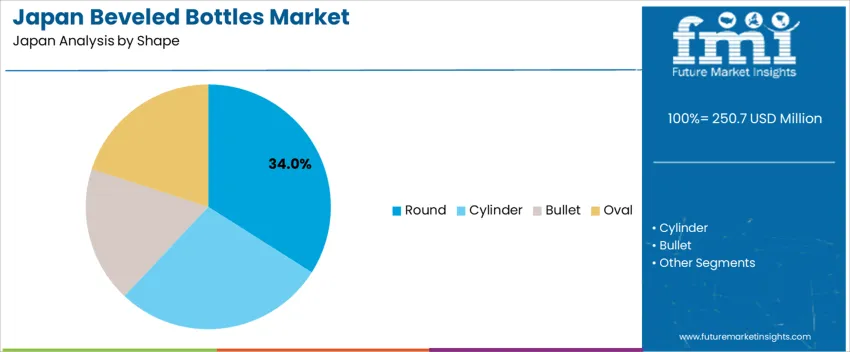
Round-shape beveled bottles hold 34.0% due to universal handling comfort, stability, and cost-efficient blow-molding processes. Their compatibility with multiple product categories such as cosmetics, lotions, syrups, and vitamins strengthens overall consumption. Cylindrical bottles account for 28.0%, commonly used for grooming and healthcare SKUs requiring uniform labeling surfaces. Oval bottles hold 20.0%, enhancing brand differentiation and grip support, mainly in shampoos and personal hygiene items. Bullet-style shapes represent 18.0%, serving energy drinks, fragrances, and niche luxury blends requiring sleek contouring and easy dispensing. Shape choices align with Japanese packaging standards prioritizing ergonomic grip, lightweight storage, and display visibility on narrow retail aisles.
Key Points:
- Round formats lead due to stability and wide-ranging usability
- Cylinder formats support uniform branding and label adherence
- Oval and bullet shapes serve premium and niche packaging needs
By Material, PET Holds the Largest Share
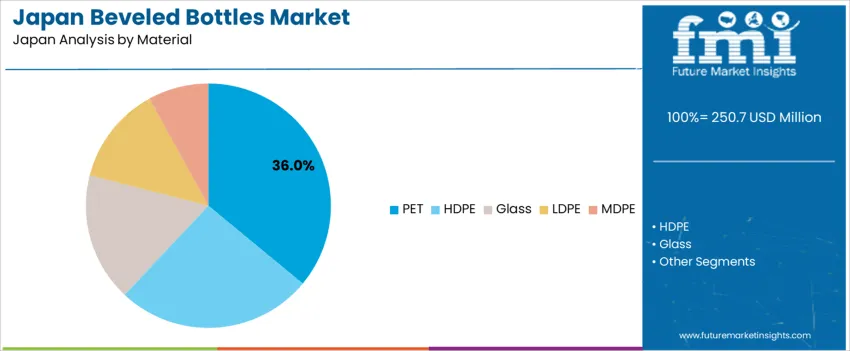
Polyethylene terephthalate (PET) accounts for 36.0%, supported by high clarity, scratch resistance, recyclability, and lightweight distribution advantages across Japan’s retail network. High-density polyethylene (HDPE) holds 26.0%, benefiting from durability and chemical compatibility for household and industrial products. Glass represents 17.0%, limited by weight and fragility but retained in luxury cosmetics and tonics requiring high-end perception. Low-density polyethylene (LDPE) holds 13.0%, driven by squeeze-friendly packaging formats. Medium-density polyethylene (MDPE) accounts for 8.0%, where flexibility and impact strength guide use in compact travel-size items. Material preferences reflect cost optimization, container safety, and ecofriendly mandates in Japan’s packaging sectors.
Key Points:
- PET supports recyclable, transparent, and mass-market applications
- HDPE used for impact-resistant and chemical-safe packaging
- Glass retains niche premium positioning in beauty and specialty items
By Seal Type, Tamper-Evident Closures Lead Demand
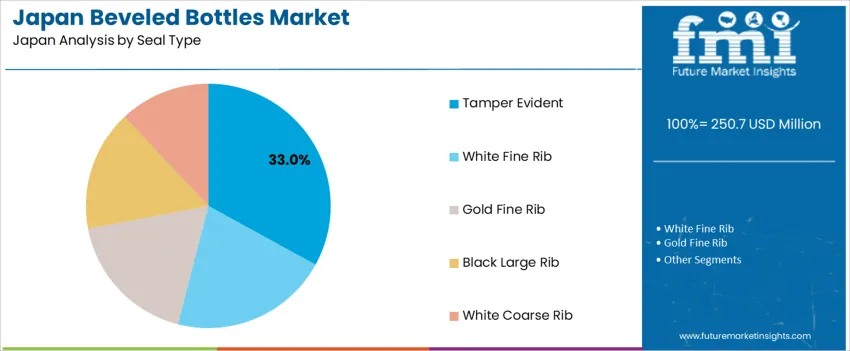
Tamper-evident seals represent 33.0%, driven by Japan’s strong product safety compliance, especially in ingestible and personal care packaging. White fine-rib closures hold 21.0%, preferred for consistent grip and clean design in everyday consumer items. Gold fine-rib types contribute 18.0%, offering premium visual appeal for cosmetic branding. Black large-rib closures hold 16.0%, optimized for stronger grip in industrial and specialty uses. White coarse-rib closures make up 12.0%, suited for cost-sensitive SKUs. Closure selection aligns with product integrity, anti-counterfeit protection, and ease of opening for diverse consumer demographics, including senior households.
Key Points:
- Tamper-evident closures ensure safety and authenticity
- Fine-rib seals support aesthetic uniformity across mass products
- Grip-focused seals preferred for ergonomic and industrial uses
What are the Drivers, Restraints, and Key Trends of the Demand for Beveled Bottles in Japan?
Growth of premium personal care and cosmetics packaging, increased emphasis on shelf differentiation and rising demand for gift-oriented beverage formats are driving demand.
In Japan, beveled bottles gain adoption among cosmetics and skincare brands that focus on visual elegance and premium branding, particularly in department stores and specialty beauty retailers in Tokyo and Osaka. Beveled shapes provide a distinctive shelf presence for fragrances, serums and lotions targeted at higher-income consumers and inbound tourists purchasing luxury beauty products. Premium beverage producers, including craft alcohol and specialty tea bottlers, use beveled designs for gift and seasonal releases to align with Japanese gifting culture. Glass packaging manufacturers in regions such as Aichi and Yamagata support domestic supply for small-batch production, sustaining varied design availability for local brands.
Higher packaging cost, cautious adoption in mass-market SKUs and manufacturing complexity in shaping glass restrain demand.
Beveled bottles require more complex molding tools and careful handling during production, increasing cost compared with standard cylindrical bottles. Mass-market brands that focus on price-sensitive consumers often choose simple bottle forms to maintain margins and reduce logistics risks. Some beveled structures reduce packing efficiency on automated filling lines or during shipping, which can slow adoption in large-scale distribution channels. These economic and operational considerations restrict widespread use to targeted premium lines.
Shift toward recycled-glass content, increased demand for lightweight beveled formats and rising custom design collaborations define key trends.
Japanese packaging suppliers are expanding beveled bottles with higher recycled-glass content to align with sustainability expectations and resource-circulation policies. Lightweight beveled designs support reduced material use while retaining premium appearance, improving shipping efficiency for domestic e-commerce deliveries. Beauty and beverage brands collaborate closely with bottle manufacturers to develop custom geometries that reflect seasonal themes or luxury aesthetics. Limited-edition packaging tied to events, tourism campaigns and department-store exclusives continues to promote category visibility. These trends suggest stable, design-driven demand for beveled bottles across Japan’s premium product segments.
Analysis of the Demand for Beveled Bottles in Japan by Region
Demand for beveled bottles in Japan is linked to beverage packaging, premium consumer-goods design, and enhanced label presentation requirements. Growth reflects interest in packaging differentiation across craft beverages, personal-care goods, functional drinks, and limited-edition products. Kyushu & Okinawa leads at 6.7%, followed by Kanto (6.1%), Kansai (5.4%), Chubu (4.7%), Tohoku (4.2%), and Rest of Japan (3.9%).
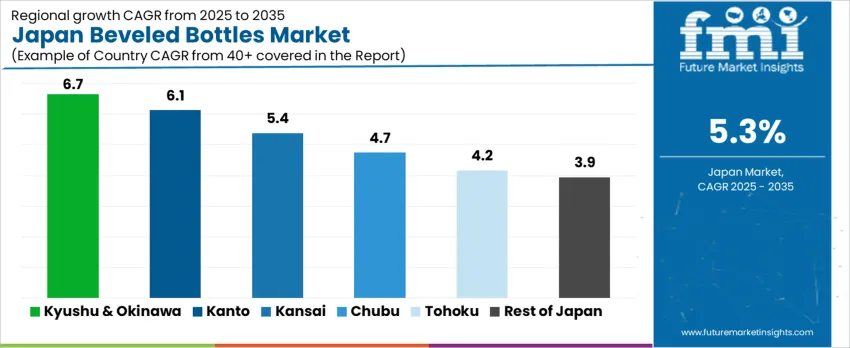
| Region | CAGR (2025 to 2035) |
|---|---|
| Kyushu & Okinawa | 6.7% |
| Kanto | 6.1% |
| Kansai | 5.4% |
| Chubu | 4.7% |
| Tohoku | 4.2% |
| Rest of Japan | 3.9% |
How is Kyushu & Okinawa driving demand for beveled bottles?
Kyushu & Okinawa posts 6.7% CAGR, supported by beverage bottling activity and growing premium packaging usage among local drink producers. Shochu and region-specific alcoholic beverages rely on beveled glass formats to support product shelf distinction in retail and gifting channels. Tourism in Okinawa sustains sales of compact souvenir-oriented packaging where beveled edges enhance grip and visual impact. Personal-care brands located in Fukuoka and Kumamoto adopt beveled PET and glass containers for lotions, hair products, and body oils sold through pharmacies and specialty shops. Local food processors use these containers for sauces and condiments aiming for a premium aesthetic in domestic and export distribution. Packaging converters in the region test lightweight beveled designs that preserve structural strength during freight handling. Distribution networks expand retail penetration across convenience channels offering ready-to-carry beverages.
- Premium beverage presentation supporting regional consumption
- Tourism sales reinforcing beveled bottle demand
- Personal-care packaging adoption strengthening baseline purchasing
- Lightweight design integration maintaining durability
How is Kanto shaping demand for beveled bottles?
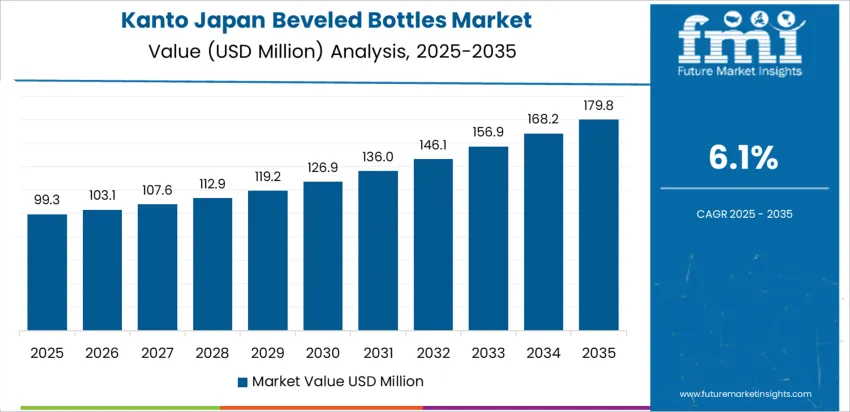
Kanto records 6.1% CAGR, driven by Tokyo and Yokohama serving as headquarters for large beverage packers, cosmetic manufacturers, and brand-design agencies. Urban consumers prioritize packaging aesthetics for wellness beverages, flavored water, and cosmetic liquids stored in personal bags. Retailers in dense shopping districts introduce limited-run products featuring beveled containers that improve brand recognition on crowded shelves. Pharmaceuticals and OTC health products packaged in small beveled bottles support controlled dispensing for liquid formulations. Packaging companies in Kanto operate high-precision molding lines capable of maintaining surface clarity and label-fit consistency in complex container shapes. E-commerce fulfillment hubs in Saitama and Chiba rely on sturdy beveled profiles that resist cracking during parcel handling. Product lifecycle planning emphasizes compatibility with existing cap threading and automated filling systems.
- Brand-driven packaging strategies influencing adoption
- Urban retail channels promoting visual product differentiation
- Pharmaceuticals requiring stable beveled designs
- Fulfillment centers supporting structurally durable formats
How is Kansai contributing to beveled bottle requirements?
Kansai posts 5.4% CAGR, supported by Osaka, Kyoto, and Kobe beverage producers, along with personal-care packaging usage across regional manufacturing hubs. Craft drink brands adopt beveled containers for visual consistency with premium branding used in nightlife and dining settings. Skincare manufacturers employ beveled PET and glass options to align with product portfolios targeting mid-to-high-income consumers. Retail stores in Osaka station zones rely on visually distinct containers that encourage quick selection during daily commuting. Packaging operations in Kansai emphasize efficient batch-changeovers due to high SKU rotation. Food manufacturers use beveled bottles for specialty sauces and health beverages, requiring precise molding tolerance to maintain leak resistance. Distribution networks depend on container stackability and pallet stability for dense freight routing across Kansai ports.
- Craft beverage packaging increasing beveled bottle usage
- Personal-care and skincare filling lines reinforcing demand
- High SKU turnover driving adaptable molding setups
- Freight routes requiring shape-retention and handling safety
How is Chubu influencing beveled bottle demand?
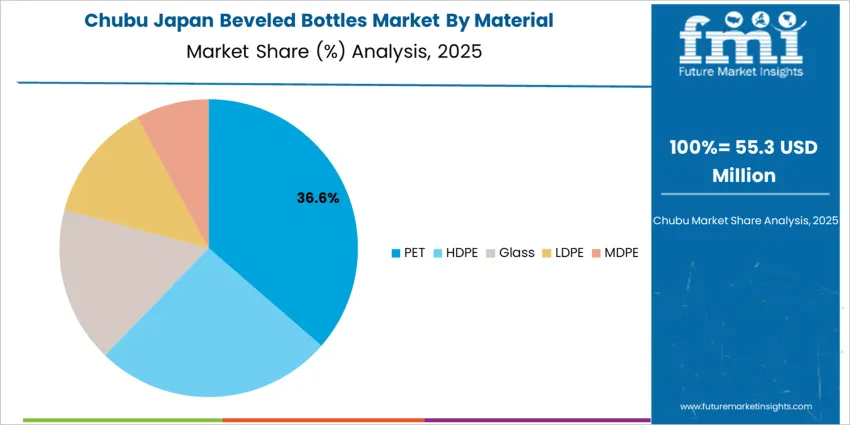
Chubu maintains 4.7% CAGR, based on manufacturing activities around Aichi and Shizuoka that support beverages, condiments, and household liquid packaging. Automotive and industrial clusters enable engineering knowledge transfer to packaging mold precision and material standardization. Processed tea and ready-to-drink beverages use beveled PET formats suited for vending machine channels across the region. Consumer emphasis on durability drives demand for reinforced beveled shapes that maintain rigidity under high-fill pressures. Export-oriented food producers integrate beveled bottles into product lines marketed to Southeast Asia. Bottling companies evaluate cost-to-weight efficiency and compatibility with shrink-sleeve labeling. Local distribution networks ensure reliable replenishment of FMCG goods across retail chains and highway-linked logistics centers.
- Vending machine channels sustaining beverage packaging needs
- Mold accuracy supported by regional manufacturing expertise
- Export-oriented production encouraging standardized beveled formats
- Label optimization requiring consistent surface geometry
How is Tohoku shaping beveled bottle adoption?
Tohoku posts 4.2% CAGR driven by local beverage producers, agriculture-linked food packaging, and seasonal tourism product distribution. Bottled apple beverages, fruit-based drinks, and nutritional products adopt beveled shapes for enhanced brand distinction without altering production fundamentals. Packaging selection emphasizes protection during long-distance freight from inland facilities to major retail and distribution hubs nationwide. Regional converters focus on containers that maintain performance at low temperatures due to refrigerated handling conditions. Visitors during seasonal travel periods create consumer peaks for gift-grade beverage packaging that benefits from beveled aesthetics. Procurement teams evaluate container stability in secondary packaging to manage shipment vibration.
- Agricultural beverage use supporting beveled options
- Cold-chain logistics driving durability considerations
- Tourism-linked purchases shaping premium packaging
- Freight transport requiring structural reliability
How is the Rest of Japan using beveled bottles?
The Rest of Japan records 3.9% CAGR through steady procurement of beveled bottles in smaller beverage companies, local cosmetics firms, and regional specialty products. The adoption pace aligns with operational continuity where packaging updates occur during routine equipment cycles instead of rapid product redevelopment. Demand patterns reflect value-focused purchasing for containers that maintain brand presence without extensive redesign. Procurement emphasizes compatibility with existing labeling tools and filling systems to avoid capital expenditure. Container suppliers support low-to-mid-volume orders with delivery schedules aligned to regional retail distribution. Tourism-influenced retail contributes periodic demand spikes for decorative or gift-aligned packaging.
- Incremental packaging upgrades aligning with replacement cycles
- Cost-sensitive selection maintaining performance expectations
- Flexibility for low-volume order fulfillment
- Tourism exposure supporting limited-edition runs
What is the competitive landscape of demand for beveled bottles in Japan?
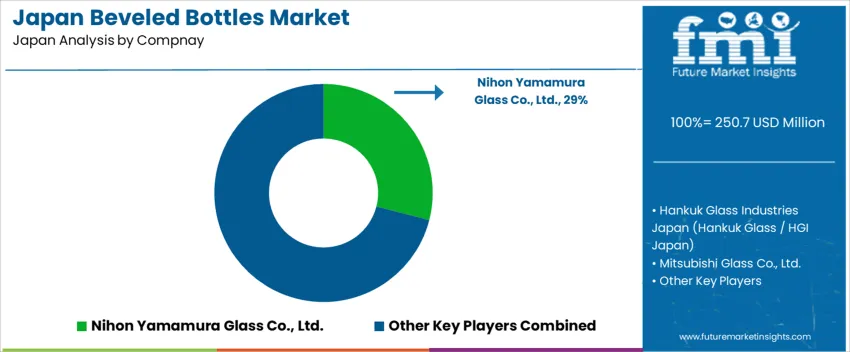
Demand for beveled bottles in Japan is driven by producers of premium alcoholic beverages, perfumery, and specialty food items requiring higher rigidity and controlled decorative finishing. Nihon Yamamura Glass Co., Ltd. holds an estimated 29.0% share, supported by stable forming performance, dimensional uniformity, and established supply to major Japanese whisky, shochu, and cosmetics brands. Its bottles maintain consistent clarity and surface quality required for high-end packaging. Hankuk Glass Industries Japan maintains presence through glass containers used in beverages and condiments where predictable strength and balanced weight distribution support retail handling. Mitsubishi Glass Co., Ltd. contributes controlled production in premium cosmetic packaging, delivering precise bevel geometry and stable color-glass formulations.
Otsuka Packaging Industries Co., Ltd. supports selective deployments in health-drink and pharmaceutical packaging, where structural accuracy ensures cap compatibility and shelf-stability requirements. Ardagh Group Japan provides specialty imports for international brands distributed in Japan, reinforcing niche demand for decorative high-strength containers. Competition in Japan centers on mold-accuracy stability, break-resistance, high-clarity surface quality, glass composition control, and flexible design capability. Demand remains concentrated in premium rigid packaging where brand presentation and structural reliability must be maintained throughout Japan’s regulated retail and transport environments.
Key Players in Japan Beveled Bottles Demand
- Nihon Yamamura Glass Co., Ltd.
- Hankuk Glass Industries Japan (Hankuk Glass / HGI Japan)
- Mitsubishi Glass Co., Ltd.
- Otsuka Packaging Industries Co., Ltd.
- Ardagh Group Japan
Scope of the Report
| Items | Values |
|---|---|
| Quantitative Units | USD million |
| Shape | Round, Cylinder, Bullet, Oval |
| Material | PET, HDPE, Glass, LDPE, MDPE |
| Seal Type | Tamper Evident, White Fine Rib, Gold Fine Rib, Black Large Rib, White Coarse Rib |
| Capacity | 3oz–11oz, 0.5oz–3oz, Greater than 11oz, Less than 0.5oz |
| End Use | Packaging & Storage, Water Bottles |
| Regions Covered | Kyushu & Okinawa, Kanto, Kansai, Chubu, Tohoku, Rest of Japan |
| Key Companies Profiled | Nihon Yamamura Glass Co., Ltd., Hankuk Glass Industries Japan (HGI Japan), Mitsubishi Glass Co., Ltd., Otsuka Packaging Industries Co., Ltd., Ardagh Group Japan |
| Additional Attributes | Dollar sales by shape, resin type, seal category, and capacity segments; demand driven by cosmetics, nutraceuticals, and premium personal care packaging; increasing replacement of glass with lightweight PET; regulatory focus on recyclability influencing material choice; high consumption concentrated in Kanto and Kansai for beverage and consumer product packaging; innovation in tamper-evident and ribbed closure systems for improved product safety. |
Japan Beveled Bottles Demand by Segments
Shape:
- Round
- Cylinder
- Bullet
- Oval
Material:
Seal Type:
- Tamper Evident
- White Fine Rib
- Gold Fine Rib
- Black Large Rib
- White Coarse Rib
Capacity:
- 3oz-11oz
- 0.5oz-3oz
- Greater than 11oz
- Less than 0.5 oz
End use:
- Packaging & Storage
- Water Bottles
Region:
- Kyushu & Okinawa
- Kanto
- Kansai
- Chubu
- Tohoku
- Rest of Japan
Bibliography
- International Organization for Standardization. (2023). Glass containers and closures – general requirements and testing methods. ISO Standards Publications.
- Japan Glass Bottle Association. (2023). Glass bottle manufacturing guidelines and design considerations for specialty bottles. JGBA Industry Technical Publications.
- Japan Industrial Standards Committee. (2023). JIS standards for container performance testing and packaging specifications. JIS Standards Publications.
- Future Market Insights. (2025). Demand for Beveled Bottles in Japan Size and Share Forecast Outlook 2025 to 2035. Future Market Insights Industry Analysis Reports.
Frequently Asked Questions
How big is the demand for beveled bottles in Japan in 2025?
The demand for beveled bottles in Japan is estimated to be valued at USD 250.7 million in 2025.
What will be the size of beveled bottles in Japan in 2035?
The market size for the beveled bottles in Japan is projected to reach USD 421.1 million by 2035.
How much will be the demand for beveled bottles in Japan growth between 2025 and 2035?
The demand for beveled bottles in Japan is expected to grow at a 5.3% CAGR between 2025 and 2035.
What are the key product types in the beveled bottles in Japan?
The key product types in beveled bottles in Japan are round, cylinder, bullet and oval.
Which material segment is expected to contribute significant share in the beveled bottles in Japan in 2025?
In terms of material, pet segment is expected to command 36.0% share in the beveled bottles in Japan in 2025.